EGP Vietnam shares insights on AI applications in internal audit at the 2026 Annual Internal Audit Conference
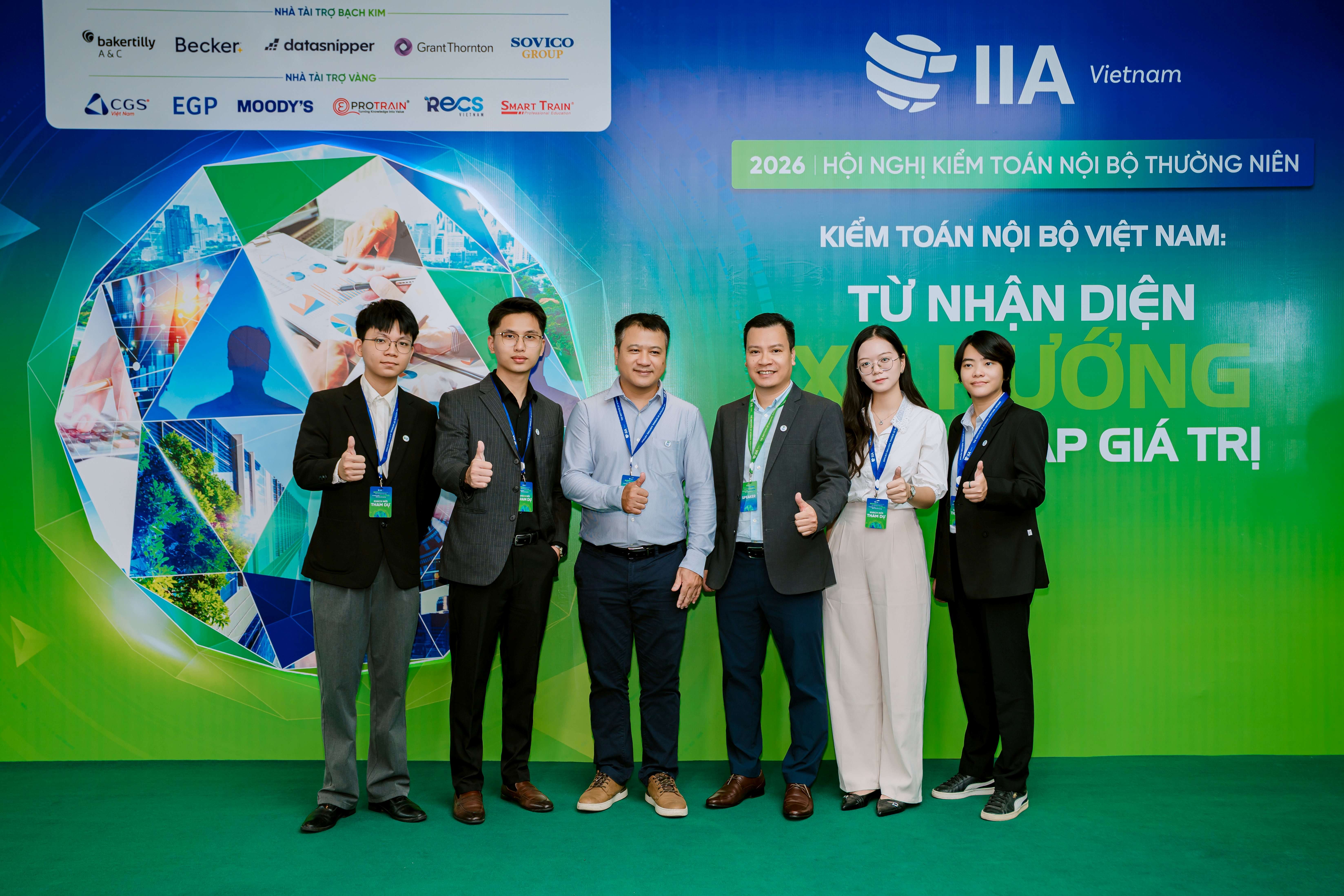
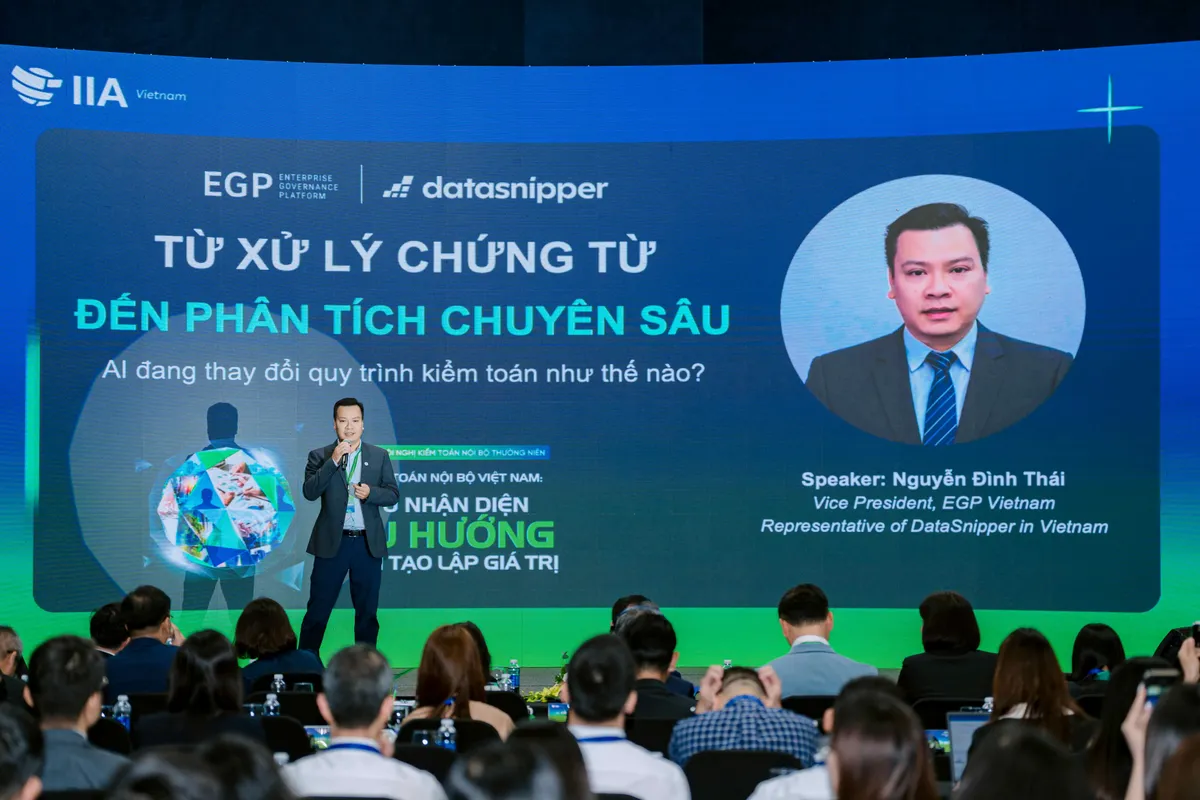
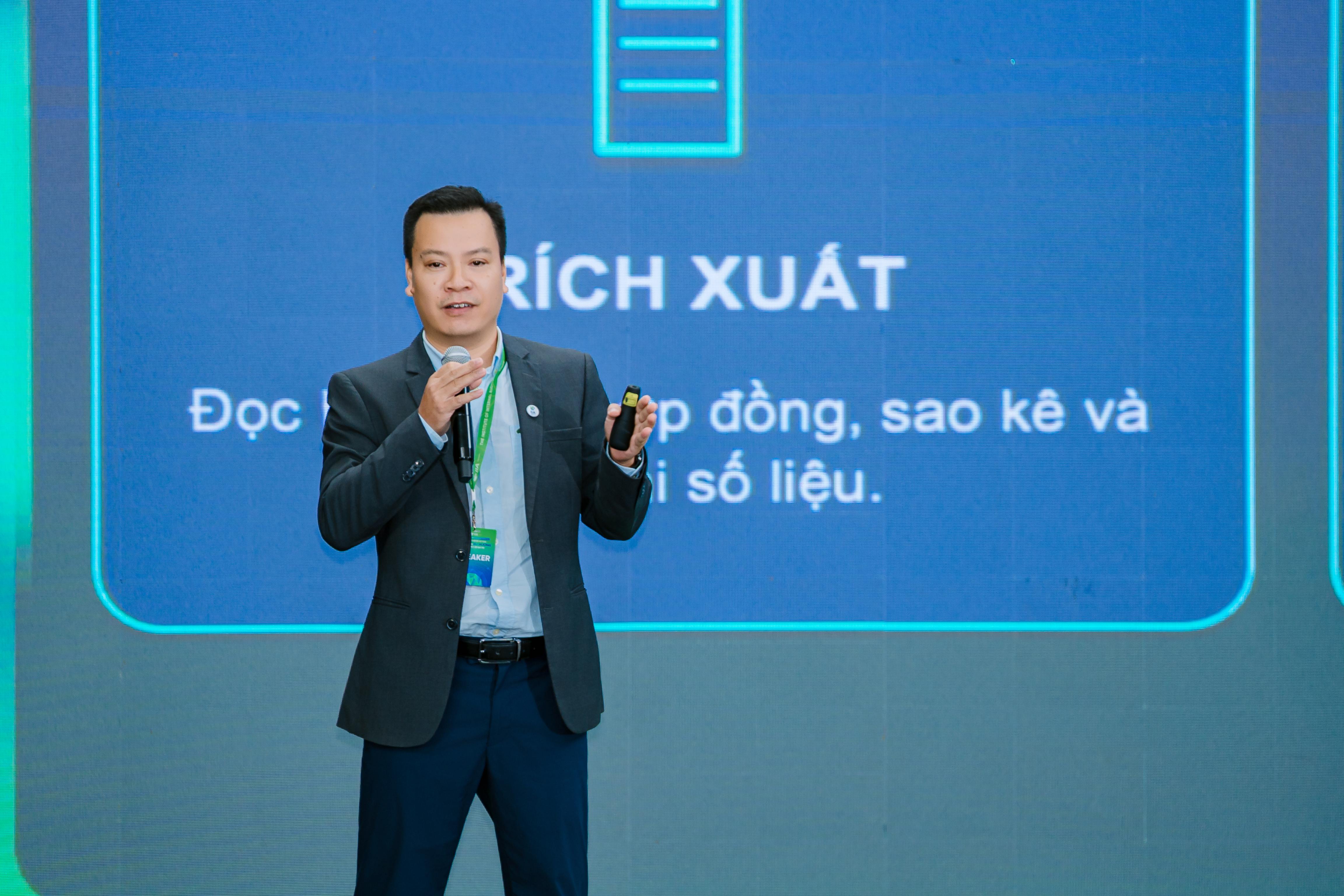
On November 6, 2026, in Hanoi, EGP Vietnam participated in the 2026 Annual Internal Audit Conference organized by IIA Vietnam, where Mr. Nguyen Dinh Thai, Vice President of EGP Vietnam and Representative of DataSnipper in Vietnam, delivered a presentation titled “From Document Processing to In-Depth Analysis: How Is AI Transforming the Audit Process?”
Through practical demonstrations, the presentation highlighted the potential of artificial intelligence (AI) to automate document processing, support exception detection, and improve auditors' efficiency, while emphasizing the irreplaceable role of professional judgment.
From insight to impact in internal audit
Held at the Grand Plaza Hotel in Hanoi, the 2026 Annual Internal Audit Conference, themed “From Insight to Impact”, brought together professionals, executives, and practitioners in internal audit, risk management, and corporate governance.
The conference focused on the evolving internal audit profession, changing stakeholder expectations, emerging technology trends, and approaches to enhancing the value that internal audit brings to organizations.
During the conference, Mr. Nguyen Dinh Thai, representing EGP Vietnam, shared his perspectives on one of the significant shifts in modern auditing: leveraging AI to reduce manual data processing tasks, allowing auditors to devote more resources to risk analysis and value-adding activities.
When document processing consumes much of auditors' time
Identifying risks, challenging assumptions, and providing in-depth assessments are core activities through which auditors deliver professional value. In practice, however, a significant portion of audit time is still devoted to repetitive tasks such as reviewing invoices, contracts, and bank statements, entering data, reconciling figures, and preparing audit workpapers.
When document volumes are large and information is scattered across multiple formats, manual processing is not only time-consuming but can also affect consistency in audit execution and evidence documentation.
Against this backdrop, the presentation raised an important question: What if AI could take over much of the document processing workload, enabling auditors to focus on interpreting the significance of the results?
As demonstrated in the presentation, AI can support information retrieval, data extraction, linking results to source documents, and highlighting discrepancies that require further examination. This creates opportunities to shift the focus from collecting and processing evidence toward analysis, verification, and risk assessment.

Demonstrating AI applications through 3 practical DataSnipper scenarios
To illustrate the practical applications of AI, Mr. Nguyen Dinh Thai introduced three scenarios using DataSnipper, demonstrating how AI can be integrated directly into Excel-based workflows and audit workpapers.
1. AI Extraction – Automated data extraction from documents
Instead of manually entering information from individual invoices or receipts, AI Extraction supports the processing of documents in various formats, including PDFs, images, and scanned files, extracting key information such as dates, suppliers, amounts, and taxes.
The extracted results are consolidated into Excel while maintaining traceability to the original source documents. This helps auditors reduce manual data entry and facilitates evidence reconciliation and verification.
2. DocuMine – Supporting contract review and assessment
For contracts containing numerous clauses and provisions requiring examination, DocuMine supports reviews based on predefined checklists and assessment criteria.
The tool helps identify clauses requiring attention, consolidates assessment results in Excel, and links the findings to relevant sections of the original contracts. This enables auditors to focus more on reviewing significant matters rather than spending substantial time searching for information.
3. Excel Agent – Data extraction, reconciliation, and exception detection
Through scenarios involving procurement and sales processes, Excel Agent demonstrated its ability to support document review, data extraction, workpaper preparation, and the identification of discrepancies requiring further investigation.
For example, the system can highlight cases where invoice amounts exceed approved values or where quantities recorded on sales orders do not match customer purchase orders.
Rather than focusing primarily on reconciliation tasks, auditors can dedicate more time to assessing the causes, potential impacts, and associated risks of these exceptions.
AI supports execution, while auditors remain responsible for conclusions
Beyond the benefits of automation, another important aspect of the presentation was the need to verify AI-generated results.
A clearly presented output does not necessarily constitute a reliable audit conclusion. Auditors must still trace findings back to original evidence, verify data and calculations, assess exceptions, and exercise professional judgment before reaching conclusions.
Accordingly, the presentation outlined four steps for verifying AI-assisted results: tracing source evidence, checking calculations, focusing on exceptions, and applying professional judgment.
This approach emphasizes the combination of technology's information-processing capabilities and human professional responsibility. AI can assist with document review, evidence linking, and issue identification, but auditors remain responsible for assessing validity, evaluating potential impacts, and forming audit conclusions.
Starting AI adoption with processes that deliver measurable results
For organizations considering the adoption of AI in internal audit, the presentation also introduced a four-step implementation roadmap:
Select: Prioritize audit procedures involving high volumes of documents and repetitive tasks.
Pilot: Test AI applications using controlled datasets.
Measure: Evaluate processing time, output quality, and exception detection capabilities.
Scale: Standardize workflows, verification procedures, and review mechanisms before expanding implementation.
Through this phased approach, organizations can assess the suitability of AI technologies based on actual performance while maintaining audit quality and control requirements.
The central message of the presentation was to give auditors more time for professional judgment: less time spent searching, processing, and reconciling documents, and more time dedicated to risk analysis and value creation.
Through its participation in IIA Vietnam's 2026 Annual Internal Audit Conference, EGP Vietnam continues to promote knowledge sharing and connect technology solutions with the practical needs of Vietnam's internal audit community.
EGP Vietnam sincerely thanks IIA Vietnam for providing a platform for professionals and organizations to exchange insights on emerging trends and innovative approaches, contributing to greater efficiency and value in corporate internal audit activities.