Source: Melbourne Water | IBM
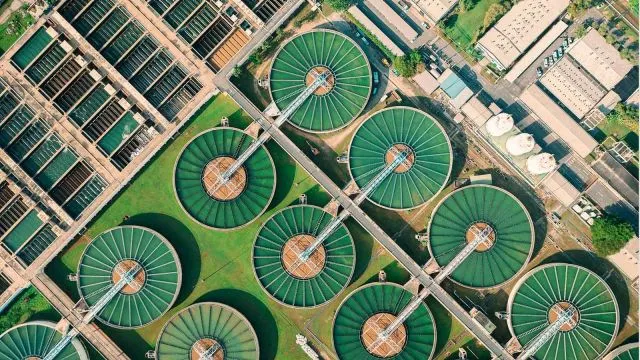
Melbourne Water is a government-owned statutory authority that protects and manages major water resources for the City of Melbourne, in Victoria, Australia. To adequately conserve and treat the city’s water supply, Melbourne Water expends significant amounts of energy in the form of electricity, fuel, combustible gasses and more.
“We treat about 90% of Melbourne’s sewage at our Eastern and Western Treatment Plants,” says Daniel Bradshaw, Energy Accountant at Melbourne Water. “Energy use is a primary expense across the organization and accounts for about half the Victorian water sector’s total carbon emissions.”
Population growth and the effects of climate change are additional energy burdens inching into the organization’s periphery. In the next 50 years, Greater Melbourne’s population will have increased by another four million residents. Climate change is raising temperature levels, contributing to the spread of bush fires and increasing the potential for other extreme weather events. Both outcomes place greater demand on the state’s water supply and infrastructure, foreshadowing a future where more energy is required to provide the same services.
As an organization committed to sustainability, Melbourne Water has pledged to help lead the state’s water sector in climate change mitigation and adaption initiatives. This pledge compelled the organization to identify more ways to reduce energy consumption and leverage renewable alternatives. But doing so would require an extremely detailed level of energy use and spend tracking that, prior to 2013, the organization did not possess.
“We were using a legacy data management system at the time that was cumbersome, limited and difficult to use,” Bradshaw recalls. Much of this difficulty was the result of the system’s reliance on manual data entry and file uploads, which often led to poor data quality. Finding, compiling and correcting multiple spreadsheets of environmental, social and governance (ESG) performance data also took time away from Melbourne Water’s future-focused initiatives. Bradshaw continues, “The data sets were created manually and uploaded using a CSV file format, so a single misplaced comma could send the entire data set askew.” This made it harder for Melbourne Water to accurately assess its energy usage and estimate future expenses.
Extracting data also required users to have specific knowledge of the system’s functionality, which minimized the number of people who were able to access and analyze the data. “If there was a data request for insights about how we were using energy, we had to create a task internally within the energy team to make those things happen,” says Bradshaw. “There was no efficient way to share data insights across the organization.”
Melbourne Water decided to replace its legacy system with the IBM® Envizi™ ESG Suite to help proactively manage its portfolio of transactional energy data and to eliminate the data retention and reporting challenges hindering its sustainability efforts.
Creating a single source of truth for energy use
The IBM Envizi ESG Suite is cloud-based data and analytics software for ESG performance management. The suite provides a single source of truth for ESG and sustainability data—exactly what Melbourne Water needed to support its pursuit of mandated sustainability goals.
Melbourne Water selected Envizi to consolidate data from its various pump transferassets, storage reservoirs and treatment plants onto one dashboard. The suite automates the collection and consolidation of over 500 data types from multiple sources, so users only need to collect data once to generate reports multiple times.
After upload and consolidation is complete, Envizi’s flexible reporting tools use Melbourne Water’s inputs to produce energy intensity metrics—the quantity of cost and emissions associated with energy used. These metrics are then studied to identify energy efficiency opportunities. “We were looking for a system that could tell us where our energy spend goes historically and presently,” says Bradshaw. “Envizi lets us capture everything we have done in the past and the things we are currently doing, so we can leverage that data to develop insights for the future.”
Optimization is also easier than ever now that Melbourne Water can identify energy intensive facilities and assets and continuously benchmark those performance metrics. For example, as Bradshaw explains: “At our Eastern Treatment Plant, we know that among 500 connections, this location collectively uses almost half of the organization’s total power. We’ve been able to focus on that site and implement a large-scale solar installation, so we expect to have a massive reduction in the amount of emission intensive power used there.” Bradshaw adds that it has been very helpful for Melbourne Water to have such information so readily available. “Now we can see our energy consumption over time and quickly run reports for our stakeholders that contain an overview of the site’s energy usage and any changes to metering costs or service charges,” he says.
With Envizi, Melbourne Water has the data foundation to back up its sustainability initiatives, allowing the organization to track the performance of identified renewable energy projects over time. The ability to analyze historical activity has permitted the targeted replacement of many non-renewable energy sources in its treatment and transfer system with renewable resources like solar panels, hydroelectric power stations and sewage gas combustion engines. By 2025, Melbourne Water plans to source 100% of its electricity from renewable energy sources.
“We were looking for a system that could tell us where our energy spend goes historically and presently. If we can capture everything we’ve done in the past and the things we’re currently doing, we can leverage that data to develop insights for the future.” - Daniel Bradshaw Energy Accountant Melbourne Water.
The data-driven fast-track to net zero
With all its data management handled via a single system of record, Melbourne Water can now address the following sustainability goals with speed and simplicity.
Manage utility spend and risk
Envizi puts robust data quality assurance tools in place, such as a comprehensive tariff engine and data accruals functionality, complemented by automated data capture capabilities which can both mitigate errors common in manual data entry and accelerate the data input process. Utility bill capture and validation is also facilitated, allowing Melbourne Water to effectively manage risk by accurately estimating future bills. “We now have end-of-month accrual calculations being accurate within 0.5% of final invoicing results,” notes Bradshaw.
Streamline sustainability reporting
Automated data capture pulls information from multiple data sources. The same data can be used for all of Melbourne Water’s ESG related reporting and compared against bespoke energy intensity metrics. Streamlined reporting also creates audit trails and supports internationally recognized ESG reporting frameworks, such as the National Greenhouse Gas Emissions Reporting Scheme (NGERS), a mandatory Australian government reporting requirement.
Proactively manage energy
Melbourne Water assets are spread across broad geographical areas with differing operational functions. The organization now has access to a consolidated, single view of its energy use across these disparate systems and sites with report grouping aligned to a logical view of organizational structure. This helps with measurement and verification of activity within segmented operational groups, and tracks whether solar and efficiency projects are meeting their original business case.
Optimize facility performance
Stakeholders now have a direct view into a single source of truth for all of Melbourne Water’s energy metrics. “Data is decentralized, and multiple teams have access to cost, consumption, account numbers and reporting tools whenever they need them,” says Bradshaw. This has improved opportunities for cost-saving identification and reduced labor efforts, saving the organization time and money.
Using the Envizi suite’s improved reporting tools and the power of data to support its sustainability efforts, Melbourne Water has been able to focus on protecting the public water supply for the climate and population demands of today and tomorrow.
As part of its mandated environmental pledge, Melbourne Water has planned a staged reduction of Scope 1 and 2 greenhouse gas (GHG) emissions of 42.4% by 2025, 93.7% by 2030, and to fully achieve net zero emissions by 2035.
For more information about IBM Envizi Solution, please contact EGP - IBM's partner in Vietnam - here.