EGP Vietnam at AICE 2026: ESG and the competitiveness of Vietnam’s Aluminum Industry in the global value chain
As Southeast Asia emerges as an increasingly attractive destination for investment in the aluminum industry, meeting environmental, social and governance (ESG) requirements is becoming a critical factor in enabling businesses to access markets, attract investment and strengthen their competitiveness within global value chains.
AICE 2026: Connecting Vietnam’s Aluminum Industry with Global Markets
On November 19–20, 2026, the SMM AICE 2026 Southeast Asia Aluminum Conference took place at Holiday Inn & Suites Saigon Airport, Ho Chi Minh City, Vietnam. The event was organized by Shanghai Metals Market (SMM) and co-organized by the Vietnam Aluminum Association (VAA).
The conference brought together manufacturers, investors, industry experts, international organizations and technology solution providers across the aluminum value chain. It provided a platform for exchanging insights on the trends shaping the future of the industry, ranging from investment, trade and regional cooperation to green transition, carbon emissions reduction and the circular economy.
Hosting AICE 2026 in Vietnam created opportunities to strengthen connections between domestic businesses and international partners while enhancing the position of Vietnam’s aluminum industry within the global value chain.
However, alongside the opportunities arising from shifting global supply chains and international investment flows, businesses are also facing increasingly stringent requirements relating to environmental standards, social responsibility, data transparency and responsible business practices.
EGP Vietnam shares ESG perspectives amid Southeast Asia’s Aluminum investment boom
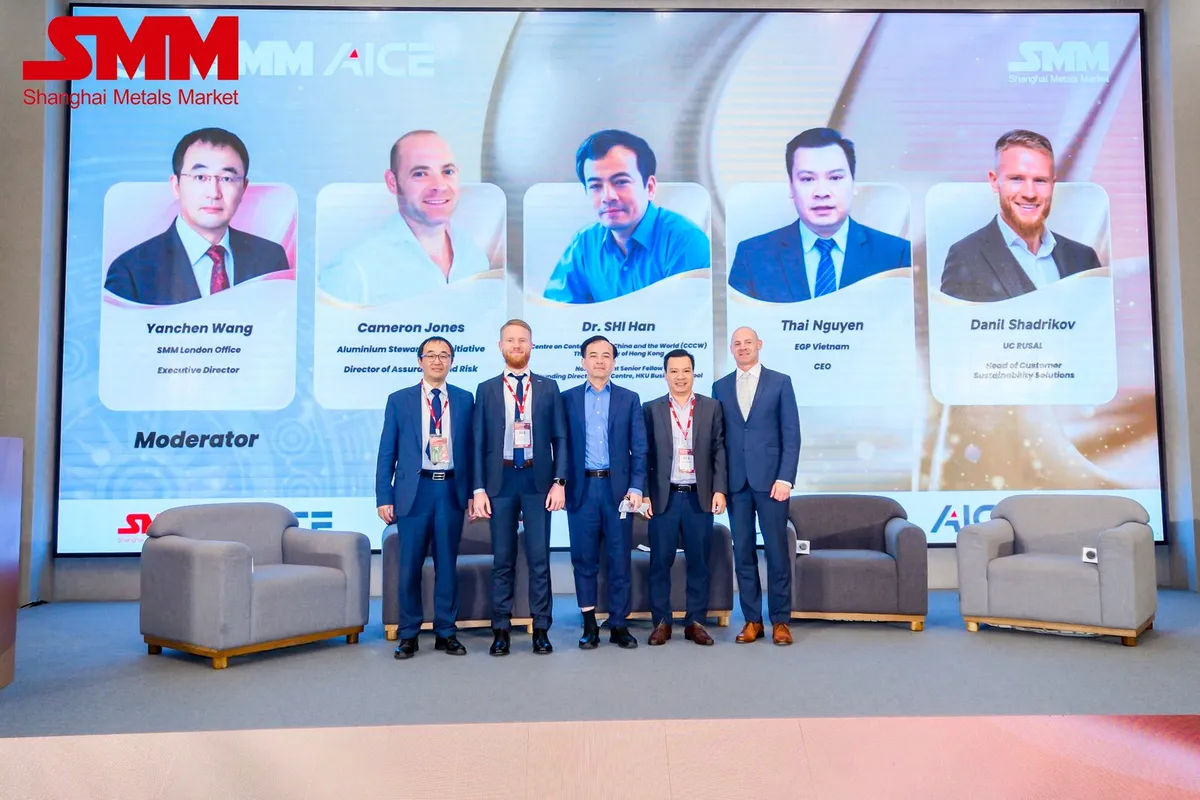
At AICE 2026, Mr. Thai Nguyen – Vice President, EGP Vietnam, participated in the panel discussion entitled “ESG Compliance Under Southeast Asia’s Aluminum Investment Boom: Pressures and Pathways.”
The panel brought together industry experts and representatives from international organizations:
Yanchen Wang (Moderator) – Executive Director, SMM London Office.
Cameron Jones – Director of Assurance and Risk, Aluminium Stewardship Initiative (ASI).
Dr. Shi Han – Non-resident Senior Fellow, Centre on Contemporary China and the World (CCCW), The University of Hong Kong.
Thai Nguyen – Vice President, EGP Vietnam.
Danil Shadrikov – Head of Customer Sustainability Solutions, UC RUSAL.
The discussion focused on evolving ESG expectations and requirements as investment in Southeast Asia’s aluminum industry continues to expand, as well as how businesses can proactively adapt to regulatory requirements, international sustainability standards and responsible investment practices.
The panelists also emphasized that ESG in energy-intensive industries such as aluminum extends beyond carbon emissions reduction. It also encompasses social responsibility, corporate governance and information transparency throughout the value chain.
Three ESG pressures shaping Vietnamese businesses
Drawing on practical insights from Vietnamese businesses, Mr. Thai Nguyen highlighted three key sources of pressure driving companies to strengthen their governance capabilities and meet evolving ESG requirements.
First, pressure from regulators.
The evolution of environmental, greenhouse gas emissions and sustainability-related policies, regulations and standards is requiring businesses to progressively strengthen their ESG management, measurement and reporting systems.
Second, pressure from banks and financial institutions.
Environmental and social factors are receiving increasing attention in risk assessments, due diligence and financing decisions. A company’s ESG management capabilities may therefore influence its access to capital and sustainable finance opportunities.
Third, pressure from customers and supply chain partners.
Businesses participating in international supply chains are facing increasingly demanding requirements regarding emissions data, raw material traceability, social responsibility and transparency in manufacturing operations.
For the aluminum industry, these pressures demonstrate that ESG is no longer simply a matter of compliance. It is becoming an essential consideration that needs to be integrated into investment strategies, risk management and long-term business development.
ESG data management: A foundation for meeting international requirements
One of the key topics discussed during the panel was the role of data in meeting ESG requirements and accelerating the aluminum industry’s green transition.
Mechanisms and instruments such as the European Union’s Carbon Border Adjustment Mechanism (CBAM), responsible aluminum production standards and the emergence of Digital Product Passports (DPPs) highlight the growing importance of traceable and verifiable data.
From a practical implementation perspective, Mr. Thai Nguyen recommended that businesses start with high-value suppliers within their supply chains while establishing consistent, evidence-based methodologies for ESG data collection, measurement and management.
To put this approach into practice, businesses can prioritize the following actions:
Identify key ESG requirements from regulators, customers and financial institutions.
Standardize measurement methodologies and ESG data systems, particularly for greenhouse gas emissions.
Gradually extend the scope of data collection to key suppliers across the value chain.
Establish mechanisms for data quality control, traceability and verification.
Leverage technology to optimize ESG data collection, management, analysis and reporting processes.
Rather than waiting for mandatory requirements to take effect or managing data separately for individual reporting purposes, businesses should proactively establish an ESG data management foundation capable of addressing multiple stakeholder requirements.
Such a foundation can also help businesses reduce compliance costs, enhance transparency and support informed decision-making.
Overcoming fragmentation to accelerate the sustainable transition
Another key message shared by Mr. Thai Nguyen during the panel discussion was that fragmentation could be one of the most significant barriers to advancing the circular economy and moving towards common international standards.
Inconsistencies across measurement methodologies, ESG standards, data systems and reporting requirements can create challenges for businesses in coordinating activities, sharing information and meeting diverse stakeholder expectations.
Particularly in the aluminum industry, where value chains are highly interconnected across international markets, the transition towards sustainability cannot rely solely on the efforts of individual companies.
Collaboration among manufacturers, suppliers, customers, financial institutions, regulators and technology solution providers is essential to developing a responsible production and business ecosystem.
Enhancing data consistency, interoperability and information sharing among stakeholders can contribute to accelerating emissions reduction, improving resource efficiency and advancing the circular economy across the industry.
EGP Vietnam: Supporting businesses on ESG digitalization journey
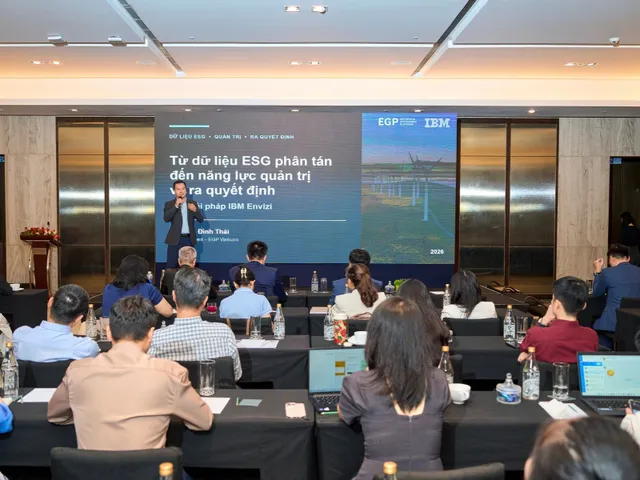
EGP Vietnam’s participation in AICE 2026 reflects its commitment to strengthening international connections, sharing practical insights and promoting the application of technology in sustainability management.
As ESG requirements become increasingly diverse and complex, EGP Vietnam aims to support businesses in the following areas:
ESG Data Management: Centralizing, standardizing and improving the quality of sustainability data.
Greenhouse Gas Emissions Management: Supporting the measurement, monitoring and management of emissions data.
ESG Reporting Digitalization: Optimizing data collection, consolidation and disclosure processes in accordance with relevant standards.
Supply Chain ESG Management: Enhancing the ability to collect, integrate and trace ESG data from stakeholders across the supply chain.
Decision-Making Support: Integrating ESG data into governance, monitoring and strategic planning processes.
By combining professional expertise with technology solutions, EGP Vietnam aims to help businesses move beyond a compliance-driven approach towards data-driven ESG management, thereby strengthening competitiveness, adaptability and long-term sustainable value creation.
EGP Vietnam provides technology solutions for ESG data management and analytics.
Contact information:
Thai Nguyen
0912 500 085